

Sweat Tips & Concerns
The Science of Sweat
2 Min Read | Date : 03/27/2025
Sweat is your body’s built-in air conditioner. It keeps you cool and your temperature at the right level. But sometimes, it can affect your confidence, your wardrobe choices, and even how you move throughout your day. By understanding why we sweat, why some people sweat more than others, and how to manage the moisture, you can find solutions to keep you comfortable, confident, and dry.
What is Sweat and Why Do We Produce It?
Sweat is mostly water mixed with a little salt (sodium chloride), small amounts of minerals (like potassium), some proteins, and traces of waste products (like urea) and other substances. It's produced by sweat glands in your skin to help cool you down when things heat up.
But sweat does more than just that. It also helps to keep your skin hydrated, because it contains amino acids that lock in moisture and prevent dryness.¹ Sweat also protects your skin from infection through natural chemicals (peptides) that help your immune system fight off infection.²
Fun fact: During a workout, you can lose about 1.5 to 2 liters of fluid per hour through sweat!
The Types of Sweat Glands and Their Roles
There are two main types of sweat glands in different parts of your body that play different roles:
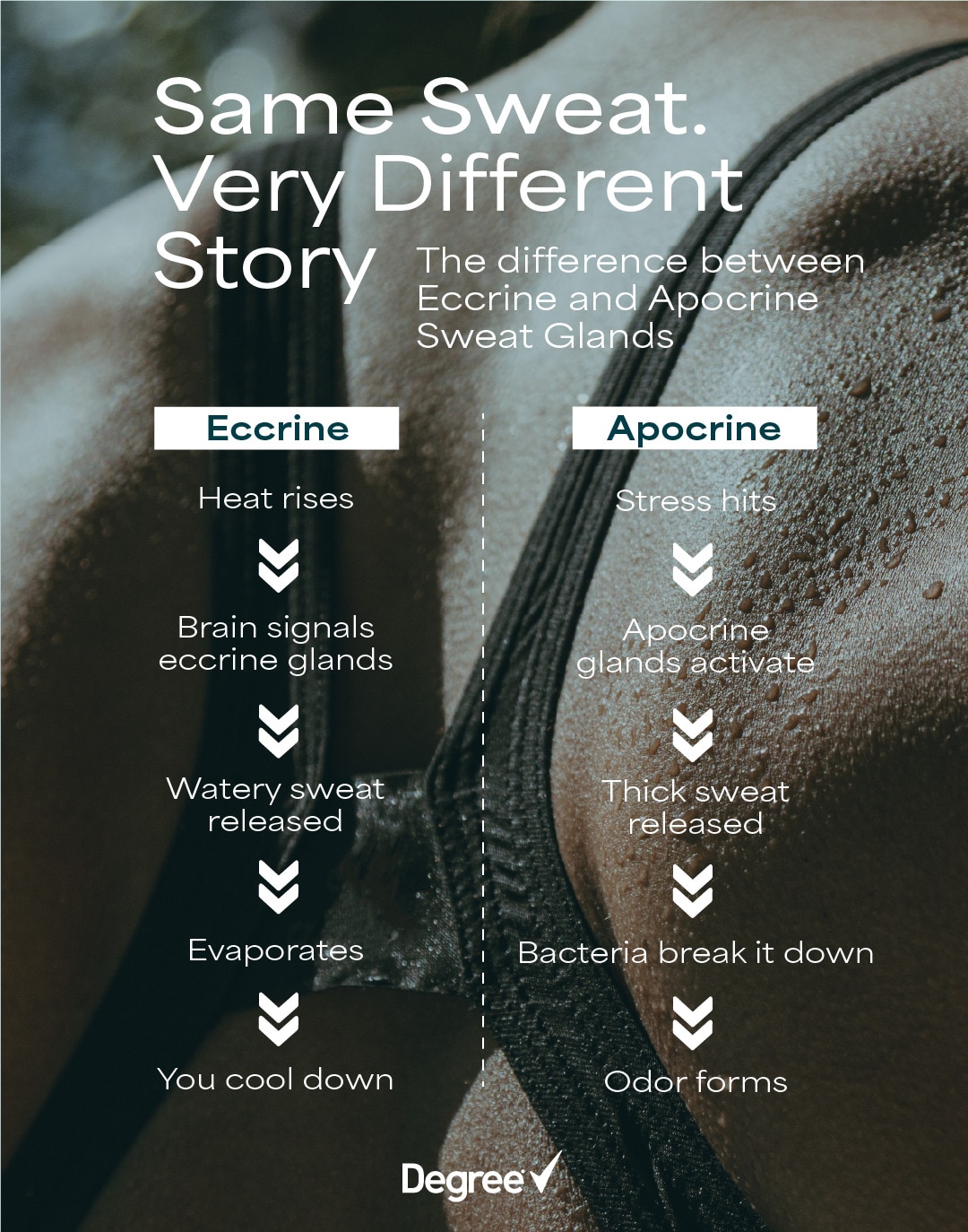
- Eccrine sweat glands: These are found all over your body and produce a watery sweat mainly for cooling you down.
- Apocrine sweat glands: Located in your underarms and groin, these glands produce a thicker sweat. It's odorless until bacteria on your skin break it down, and this is what causes body odor.
How Sweat Cools the Body
Sweat cools you down through a process called evaporative cooling. As sweat absorbs heat and evaporates, it takes heat away from your skin, lowering your body temperature. On clean skin, sweat might create beads before spreading into a thin film that evaporates more efficiently. Salt left behind from previous sweat can help new sweat spread out, improving cooling.³
Different body parts sweat differently because some areas have more sweat glands and different skin textures. For example, sweat on your forehead evaporates quickly, while underarm sweat tends to linger.
How Your Body Uses Sweat to Stay Cool
Let’s look at how sweat cools you down step by step:
1. You get hot: Your brain signals your eccrine glands.
2. Sweat forms: Sweat appears as tiny droplets on your skin.
3. It spreads: These droplets merge into a thin film.
4. It evaporates: Sweat turns to vapor, taking heat with it.
5. Cooling down happens: Your skin temperature drops, followed by your body’s internal temperature (your core temperature).
Why Some People Sweat More Than Others
Sweating is a personal thing. Fit people hit sweat mode sooner than others, but they tend to lose less sodium in their sweat. Those who are less-fit might get sweaty later but lose more sodium.² How much or how little you sweat is also influenced by things like:
- Genetics and the number of sweat glands you have
- Your fitness level and your heat tolerance
- The different areas of your body and the clothing you wear
- Environment (heat, humidity, airflow)
- What you eat and drink (spicy foods, coffee and alcohol can be sweat triggers)
- Your emotions and stress levels
How Antiperspirants Control Sweat
Antiperspirants use aluminum salts to cut down the amount of sweat that reaches your skin. Deodorants, on the other hand, focus on fighting odor—they don’t stop sweat. Clinical-strength antiperspirants pack a higher dose of aluminum compounds for heavy sweating and often include odor-fighting ingredients and moisturizers for extra comfort.
Choosing an Antiperspirant That Can Handle Heavy Sweating
For maximum non-prescription protection, look for:
- Labels that promise power: Terms like "clinical strength" or "heavy sweat protection"
- Strong actives: Higher-strength aluminum compounds like Aluminum Zirconium Tetrachlorohydrex Gly.
- Formats that fit you: Sticks for targeted coverage, sprays for quick application.
- Skin-friendly features: Moisturizers, low-residue formats, and scents you enjoy.
Degree Clinical Strength products offer prescription-strength wetness protection without a prescription, combined with odor defense and skin-conditioning ingredients to help you move with confidence.
How to Apply Antiperspirant for Maximum Effectiveness
- Apply to clean, dry skin, preferably at night when your sweat glands are less active.
- Use a thin, even layer—more isn't better.
- Let the product dry fully before getting dressed.
- Follow product directions and avoid applying to broken or irritated skin.
- Reapply when needed. Consistency is key if you’re a heavy sweater.
- If irritation occurs, hit pause, moisturize, and try again less often or switch formats.
Excessive Sweating
Hyperhidrosis is a condition where you sweat excessively, even when you're not hot or active. It often shows up in the underarms, palms, soles, or face, and can make daily life and confidence a bit tricky. Lifestyle changes and regular deodorants might not be enough, so stronger products or specialized treatments may be needed.
;Resize=(200,200))
;Resize=(200,200))
When to Consider Prescription-Strength Antiperspirants
If sweating is persistent and severe, it may be time to talk with your doctor. They can prescribe a stronger product, like a prescription-strength antiperspirant. These are designed to be safe and effective and use stronger actives than over-the-counter products.
Treatment for Managing Excessive Sweating
Treatment options you could explore with your doctor include:
- Oral medications to calm overactive sweat glands
- Botox injections to block sweating in specific areas
- Iontophoresis for hands or feet (a mild electrical current is used to reduce sweat)
Lifestyle tweaks like wearing breathable, moisture-wicking clothes, avoiding extreme heat, and managing stress can also help you feel more comfortable.
;Resize=(200,200))
;Resize=(200,200))
FAQs
What is sweat made of?
Sweat is made up of mainly water plus a little salt (sodium chloride), small amounts of minerals (like potassium), and tiny bits of waste (like urea).
Is sweating good or bad for you?
Sweating is normal. It helps regulate your body temperature and keeps you from overheating.
Why does my sweat smell worse than others?
Odor comes from bacteria on your skin breaking down sweat, especially from your apocrine glands. Things like genetics, what you eat, and stress can make the odor more noticeable.
Why do I sweat so much even when I’m not hot?
Sweating isn’t just about the temperature. Emotions, anxiety, certain foods or medications, and conditions like hyperhidrosis can make your body produce sweat even in cool or calm situations.
What is the difference between stress sweating and regular sweating?
Stress sweat is triggered by emotions and often affects your palms, soles, and underarms. Regular sweat cools you down when it’s hot or when you’re exercising.
Can antiperspirants completely stop sweating?
Antiperspirants can help reduce sweat, but no product can completely stop your body from sweating.
How often should I apply antiperspirant for the best results?
Once daily is good, ideally at night on clean, dry skin. Reapply as directed for heavy sweating or after intense activity.
Sweat is your body doing exactly what it should—cooling you down, protecting your skin, and responding to the world around you. But when it starts affecting your day-to-day life or your confidence, the right knowledge, products and guidance can make a real difference. Time to build a routine that’s strong enough to keep up with you!
References
1. Cleveland Clinic. Sweat. 2024.
2. Henry Ford Health. The Science of Sweat: Why Some People Perspire More. 2019.
3. ASU. When it comes to sweat, second time's the charm. 2025.
;Resize=(200,200))
;Resize=(200,200))