Odor Protection
Fresh Out Of The Shower, But Still Smelly? Here's Why
2 Min Read | Date : 11/04/2025
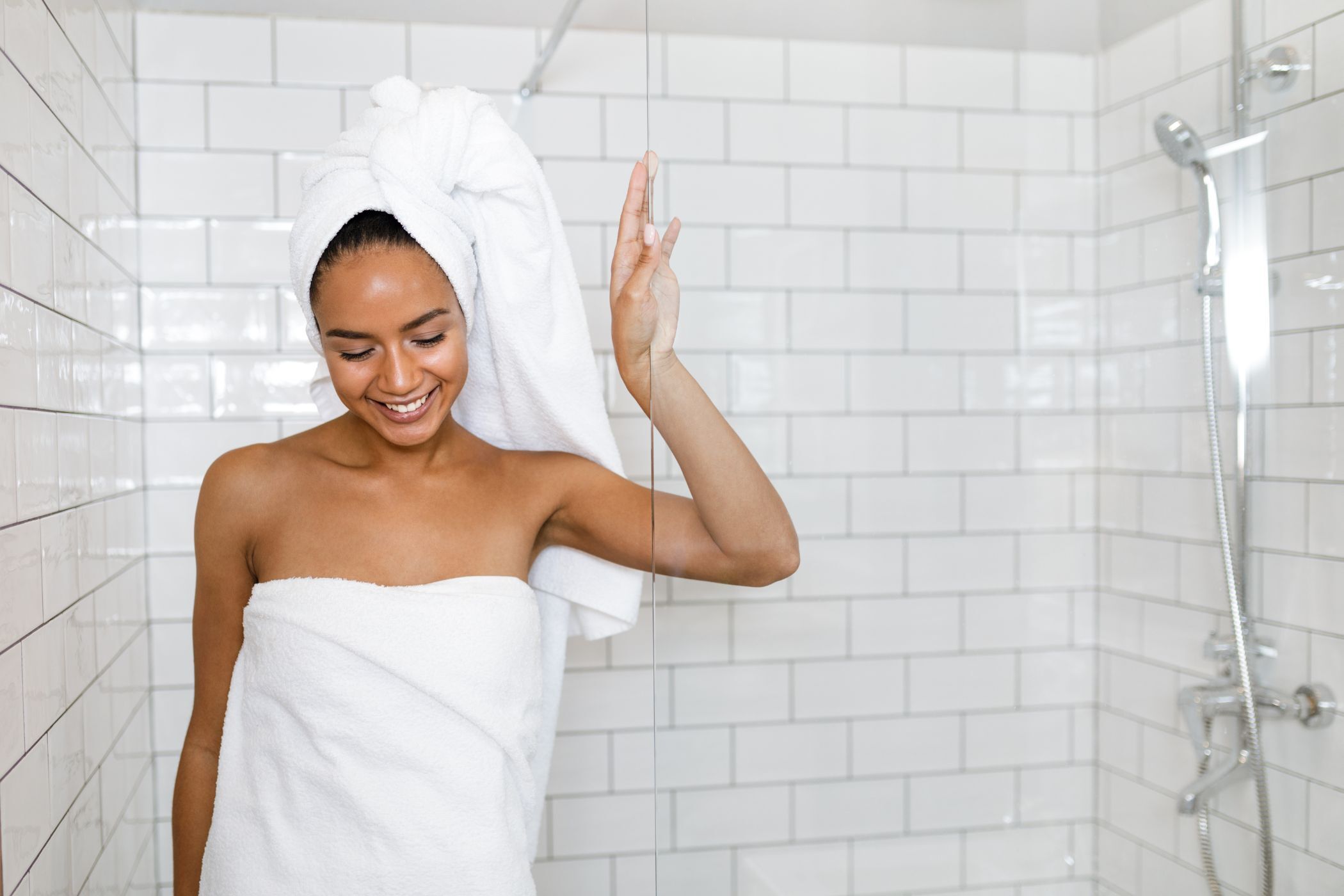
You step out of the shower feeling fresh, dry off, get dressed… and then notice something frustrating. Your armpits still smell after your shower. Not exactly the result you were going for.
But it’s actually quite common. Many people notice body odor lingering, even when they have good hygiene habits. And the reason for this isn’t about cleanliness—it has more to do with how your body works.
Why do Armpits Smell After Showering?
Body odor is caused by bacteria on your skin breaking down sweat and natural oils into smelly compounds. While showering washes away sweat, dirt, and some of that bacteria, it doesn’t remove all of it.
This means it can build up again pretty quickly, especially in warm, damp areas like your underarms. And not long after you shower, the bacteria start interacting with sweat again, causing odor to return sooner than you’d expect.
So, if you’ve ever wondered, “Why do my armpits still smell after I shower?”—relax. It’s not because you’re doing anything wrong.
The Role of Skin Bacteria and Sweat
To understand why armpits can smell after a shower, it helps to look at the science behind sweat and sweat glands.
“There are two types of sweat,” explains Unilever R&D scientist Matt Annecharico. “One is watery and occurs all over the body. The second sweat is found in areas such as the groin and underarm, which is an oily sweat. This oily sweat is the main contributing factor to body odor.”
Apocrine glands are behind producing this oily sweat, which bacteria love to feast on. The result? A strong odor.
The Suspects Behind Smelly Armpits
Even if you shower regularly, some factors make it easier for odor-causing bacteria to thrive.
- Wearing non-breathable clothing: This can trap moisture, giving odor a chance to ramp up. Always change into fresh, clean clothes after a shower, and choose breathable materials like cotton or moisture-wicking fabrics.
- Armpit hair: Hair creates extra surface area for sweat and bacteria to hang around, which can lead to lingering odor even after washing.
- Your diet: What you eat can show up in your sweat. Foods like garlic, onions, spicy dishes, and certain meats release smelly compounds through your sweat.
- Stress and hormones: When you're stressed, your apocrine glands (the ones responsible for that stronger type of sweat) kick into overdrive, which can increase body odor.
- Underlying health factors: In some cases, ongoing odor can be linked to hyperhidrosis (excessive sweating), hormonal shifts during menopause, thyroid imbalances, or some metabolic conditions. If you're worried, it's always good to check in with your doctor.
- Your skin’s pH levels: Healthy skin is a little acidic, which helps maintain the balance of bacteria on your skin. When your skin becomes more alkaline, bacteria can multiply more easily, leading to stronger smells. Many things that can affect your skin pH, from your hygiene habits and diet to your skincare products.¹
How Your Showering Habits Affect Body Odor
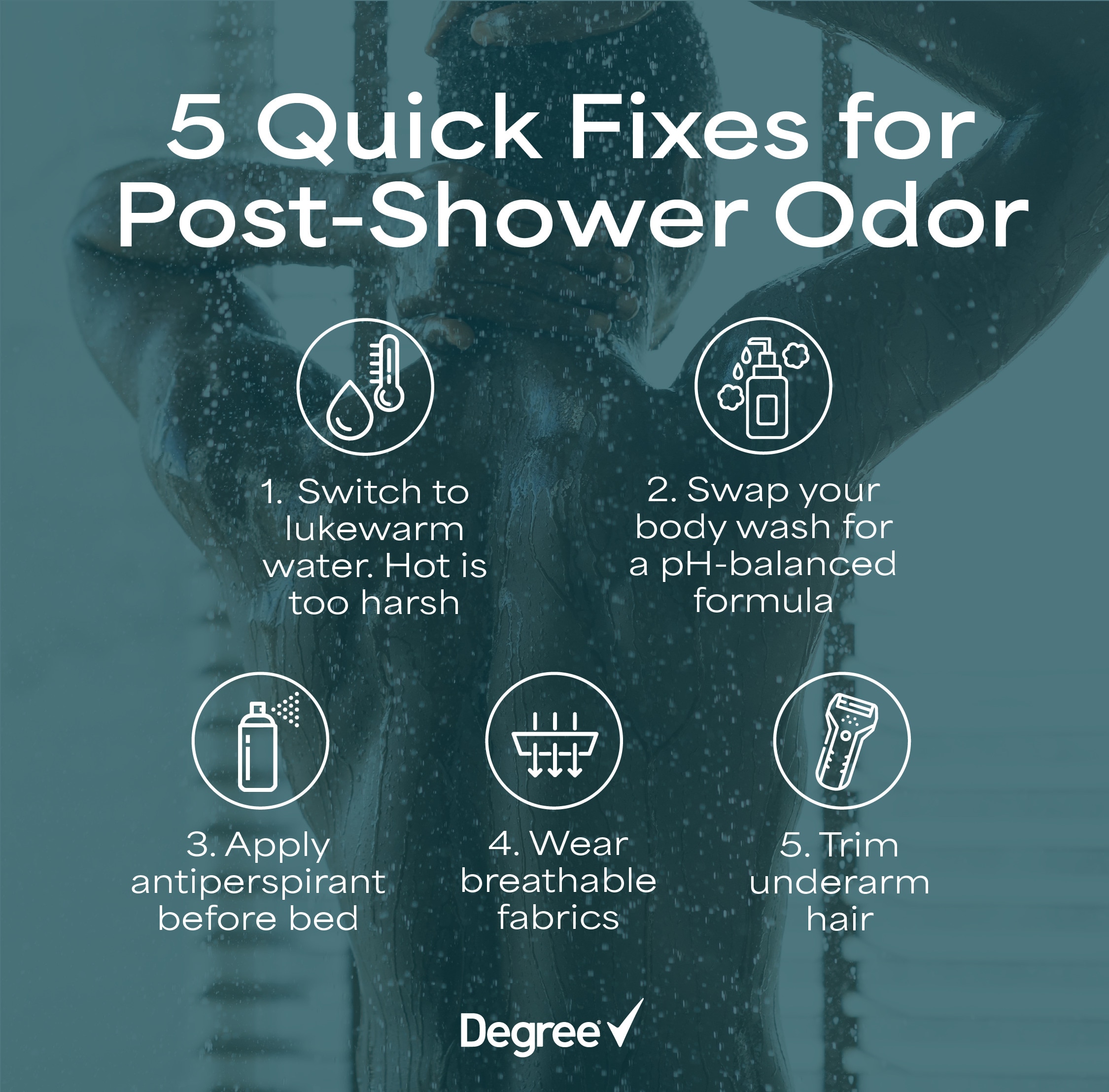
Small tweaks to your shower routine can help keep odor at bay. Did you know hot showers and harsh cleansers can disrupt your skin’s balance? Stripping away too much of its protective barrier can give odor-causing bacteria the perfect chance to bounce back faster. Try these simple tips:
- Use lukewarm water when you shower
- Reach for a gentle, pH-balanced body wash
- Focus on sweat-prone spots like your underarms and groin
- Skip intense, full-body scrubbing that can irritate your skin
Deodorant or Antiperspirant?
Deodorants and antiperspirants are designed to work differently. To stop armpits from smelling after a shower, choosing the right product is key. Deodorants tackle odor through fragrance, but they don’t stop sweat. Antiperspirants, on the other hand, act like sweat ninjas—they quietly reduce sweat at the source, leaving bacteria with less to feed on.
According to dermatologists, antiperspirants work best when applied at night. That’s because sweat glands are less active while you sleep, which gives the active ingredients a chance to get to work.
Clinical-Strength Antiperspirant
If you're dealing with persistent odor or heavy sweating, a clinical strength antiperspirant can provide stronger protection. These products are easily available and don’t require a prescription. Getting the most from a clinical strength antiperspirant is all about timing and application:
- Apply to clean, dry underarms before bed. This lets the product get to work overnight while sweat glands are less active.
- Avoid washing the area immediately after application.
- Reapply according to product directions.
Using clinical antiperspirant this way helps the active ingredients work well, noticeably reducing next-day sweat and odor.
FAQs
Why do my armpits smell so bad all of a sudden?
A change in body odor could be linked to what you eat (think garlic, onions, or spicy foods), stress sweat mixing with bacteria, or natural hormonal changes. Or maybe you’re wearing fabrics that trap moisture, which gives odor-causing bacteria more chance to build up? In some cases, there could be an underlying condition. If you make changes and there’s no improvement, it’s best to check in with your doctor.
Why do my armpits smell like onions even after showering?
This could also be caused by certain foods that contain sulfur, like garlic, onions and broccoli. This sulfur smell is released through your sweat.
Why do my armpits still smell even after antibacterial soap?
Antibacterial soap can reduce surface bacteria, but it can’t eliminate it all. Bacteria can multiply quickly, especially in warm areas like your underarms. That’s why odor can come back soon after showering.
Should I apply deodorant before or after dressing?
It’s best to apply antiperspirant or deodorant before dressing so the product can fully dry and absorb into the skin. Applying at night gives the best protection because your sweat glands are less active during sleep.
Why does antiperspirant stop working after a while?
Sometimes your body just gets used to your antiperspirant, or leftover product builds up on the skin. Rotating products, applying antiperspirant at night, and washing properly can help restore effectiveness.
Understanding why your armpits smell is the first step to feeling confidently fresh, long after you've left the shower. A combination of biology, bacteria and lifestyle factors are the reason why armpits can smell after showering—not a hygiene issue. But small changes can make a real difference. Try a gentle, pH-balanced body wash, adjust your shower water to a comfortable temperature, apply antiperspirant before bed, and swear breathable fabrics.
References
1. Cleveland Clinic. What Is Your Skin’s PH and Why Does It Matter? 2023.